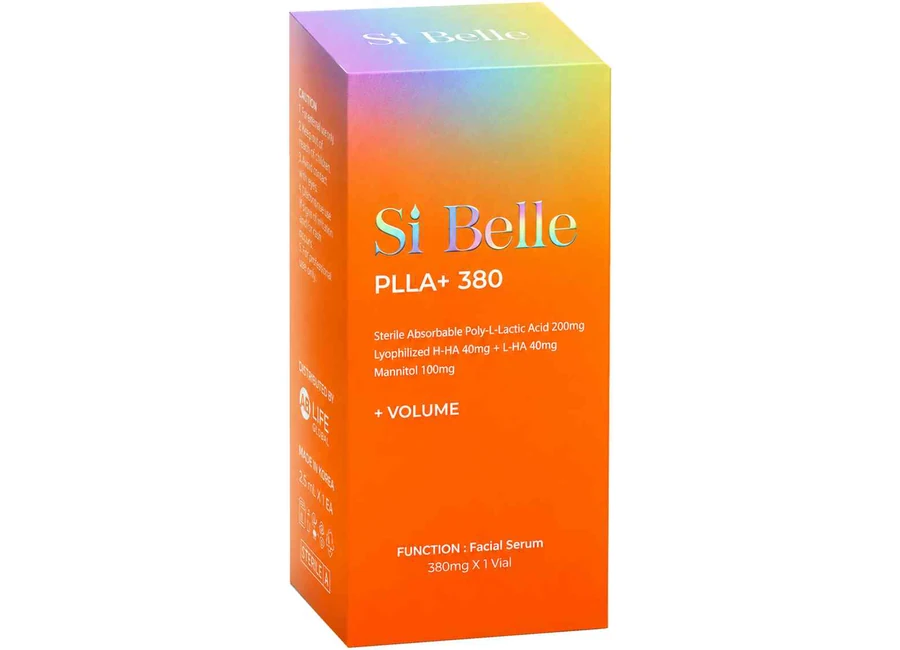
仕様
| 項目 | 製品情報 |
|---|---|
| 包装形態 | 380 mg / vial |
| PLLA | 200 mg |
| H-HA | 40 mg |
| L-HA | 40 mg |
| マンニトール | 100 mg |
| 粒子径 | 10–60 µm |
| 配合 | 52.6% PLLA / 21.1% HA / 26.3% mannitol |
技術・素材
資料ではPLLAマイクロスフェア、組織反応、コラーゲン形成を配合コンセプトとして説明しています。380 mgと400 mgでは配合・調製条件が異なるため、仕様を混同しないでください。
医療従事者向け調製情報
| 項目 | 製品情報 |
|---|---|
| 注射用水 | 9.5 mL |
| リドカイン | 2.5 mL / 2% |
| 水和時間 | 3時間 |
| ボルテックス混合 | 開始時・終了時に各1–2分 |
メーカー記載の施術スケジュール
メーカーは約4週間隔で2–3回、初期コース後の持続期間の目安を18–24か月と記載しています。個別の計画は担当医が決定し、持続期間には個人差があります。
取り扱い・アフターケア
調製と経過観察は担当医が計画します。痛み、内出血、腫れ、結節が生じることがあります。調製液の吸収に伴い、初期の見た目が変化する場合があります。
英語原文の詳細情報
以下に製品ガイドの英語原文を保持しています。上記の翻訳概要・仕様表は資料を構造的に整理したもので、PDFはメーカーまたは提供元の原本です。
Si Belle PLLA380+ combines 200 mg poly-L-lactic acid (PLLA), 40 mg high-molecular-weight hyaluronic acid, 40 mg low-molecular-weight hyaluronic acid and 100 mg mannitol in a 380 mg vial. The product information describes facial volume loss, wrinkles and contour concerns, and explains a progressive process involving PLLA microspheres, tissue response and collagen formation.
A four-ingredient formulation
Each vial contains PLLA 200 mg, H-HA 40 mg, L-HA 40 mg and mannitol 100 mg, for a total content of 380 mg.
The formulation combines PLLA microspheres with hyaluronic acid. PLLA-related tissue response is part of the manufacturer’s formulation rationale.
| Component | Amount per vial | Share stated in the catalogue |
|---|---|---|
| Poly-L-lactic acid (PLLA) | 200 mg | 52.6% |
| Hyaluronic acid: H-HA 40 mg + L-HA 40 mg | 80 mg total | 21.1% |
| Mannitol | 100 mg | 26.3% |
| Total | 380 mg | 100% |
PLLA material and microspheres
PLLA is poly-L-lactic acid, a polymer formed from L-lactic acid units. The supplied catalogue discusses biodegradation and the biological response around PLLA particles.
The product has a stated microsphere particle range of 10-60 µm. PLLA and HA are biodegradable materials.
Role and principle
The manufacturer describes a progressive process involving PLLA microspheres, tissue response and collagen formation.
| Stage | Description |
|---|---|
| 1. PLLA microspheres | Microspheres are introduced into the treatment area. |
| 2. Tissue response | The proposed process involves cell migration around the particles. |
| 3. Collagen formation | The manufacturer links this tissue response with collagen formation. |
Facial areas and treatment planning
The product information describes facial volume loss, wrinkles and contour concerns. Area selection and suitability are assessed by the treating clinician.
- Forehead
- Cheekbones
- Cheeks
- Nasolabial folds
- Chin
Professional preparation: 380 mg model
Preparation, treatment and follow-up are planned by the treating clinician for the individual patient. The following technical parameters are reproduced from the 380 mg model information.
| Parameter | Preparation details |
|---|---|
| Vial content | 380 mg |
| Water for injection | 9.5 mL |
| Lidocaine | 2.5 mL of 2% lidocaine |
| Hydration time | 3 hours |
| Vortex mixing | 1-2 minutes at the beginning and end |
Treatment schedule and reported duration
The manufacturer describes 2-3 sessions, approximately 4 weeks apart. The treating clinician determines the individual treatment plan.
The manufacturer cites an effect of approximately 18-24 months after an initial 2-3 sessions. This is a reported estimate; individual durability varies.
Aftercare and follow-up
Discuss swelling, skin changes and follow-up timing with your treating clinician.
Massage, cooling and other home-care measures should follow the treating clinician’s individual instructions.
Pain, bruising, injection marks and swelling may occur. Recovery and return to activities depend on the individual clinical response.
Nodules can occur and may require further treatment. The treating clinician assesses and manages individual concerns.
The manufacturer attributes some early volume to the preparation fluid. Swelling and appearance can change as that fluid is absorbed.
Questions and answers
| Question | Answer |
|---|---|
| Who is the facial treatment intended for? | The product information describes facial volume loss, wrinkles and contour concerns. Suitability is assessed for each patient. |
| What is in each vial? | PLLA 200 mg, H-HA 40 mg, L-HA 40 mg and mannitol 100 mg, for a total content of 380 mg. |
| How does it differ from an HA-only filler? | The formulation combines PLLA microspheres with hyaluronic acid. PLLA-related tissue response is part of the manufacturer’s rationale. |
| Are the polymer materials biodegradable? | PLLA and HA are biodegradable materials. Material characteristics do not replace an assessment of the finished product and patient. |
| What is the recommended treatment schedule? | The manufacturer describes 2-3 sessions, approximately 4 weeks apart. The treating clinician determines the individual treatment plan. |
| How long does the manufacturer report an effect? | Approximately 18-24 months after an initial 2-3 sessions. This is a reported estimate; individual durability varies. |
| What about recovery and daily activities? | Pain, bruising, injection marks and swelling may occur. Recovery and return to activities depend on the individual clinical response. |
| Can nodules occur? | Nodules can occur and may require further treatment. The treating clinician assesses and manages individual concerns. |
| Why can early appearance change after treatment? | The manufacturer attributes some early volume to the preparation fluid. Swelling and appearance can change as that fluid is absorbed. |
| How are bleeding or bruising addressed? | Bleeding and bruising are discussed in the product information. The treating clinician assesses and manages these concerns. |
Manufacturer application examples
The supplied brochure includes two nasolabial-region photograph sets: before and after 2 months; before and after 3 months.
業務に関するお問い合わせ
会社名、仕向国、希望モデル、数量をご記入ください。メールアプリが開きます。お問い合わせが自動送信・保存されることはありません。
alexmoon@ictmedicalco.com ↗